


29 Jan A few words about the calves
Once a common sight in the Świętokrzyskie landscape, cows grazing in the fields have become a rare view today. One of the region’s largest herds can still be seen in the Ponidzie area — and it just got bigger. The first Polish Red calf of the year has been born, and more are expected to follow. Nature conservationists hope to encourage local farmers to start raising this native breed once again.
Rusałka is just two days old and won’t leave her mother’s side. For now, her main activities are eating and sleeping.
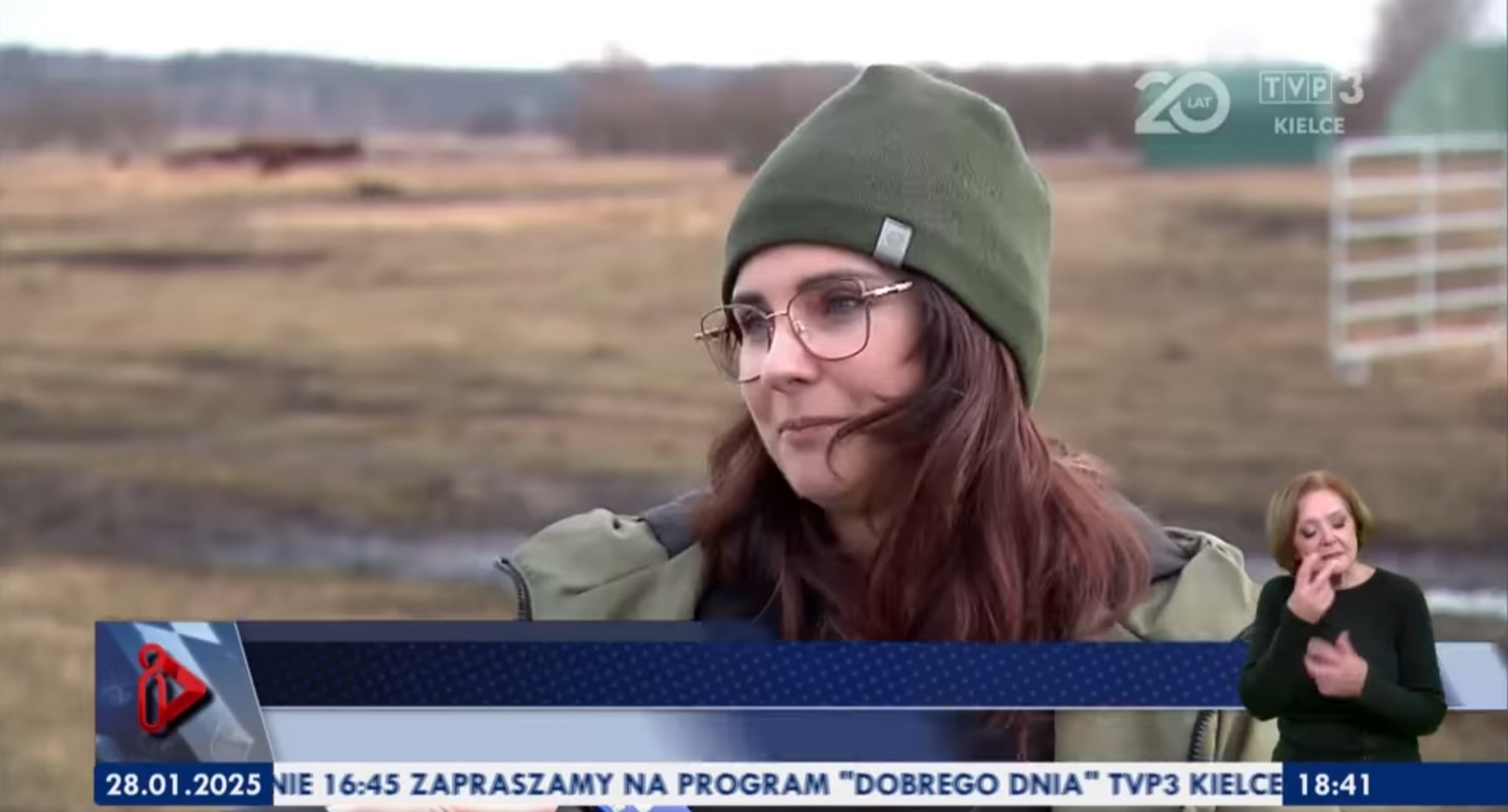
“Between naps and feeding, she runs around like crazy. Those are her three basic needs at this stage,” says Katarzyna Bień from the Nature Education Center in Umianowice.
This is the first calf born this year at the Umianowice center — but certainly not the last. Conservationists hope to welcome around 20 more calves soon. The cows raised here play a special role.
“They’re a natural, preventive tool for environmental protection. By grazing on grass, they help maintain habitats for bird species,” explains Alicja Adamczyk, head of the Nature Education Center in Umianowice.
Back in the 1960s, the Polish Red breed — known for its resilience to disease and harsh weather — was present in nearly every farmstead. Today, seeing cows on pasture is rare.
“According to the National Research Institute of Animal Production, there are only about 4,000 head of Polish Red cattle. That’s very few compared to the overall population of several million cows. This breed was on the verge of extinction” emphasizes Katarzyna Bień.
Economic reasons led to the dominance of the Holstein-Friesian breed. However, experts note that Polish Red cows produce milk with the highest casein content, ideal for cheese production.
“The milk is excellent — high in fat and has antibacterial properties” adds Alicja Adamczyk.
If the herd continues to grow, conservationists plan to launch a genetic preservation program. They also aim to encourage local farmers to begin breeding this native cattle once again.
The process may take years — but thanks to these efforts, cows grazing in open pastures may once again become a familiar part of the Świętokrzyskie landscape.